Why Buy Multiple Business Software When One Platform Can Manage Everything?
Introduction
As businesses grow, so do their software needs.
It often starts with a simple Excel sheet to manage customers. Then comes invoicing software for billing, accounting software for GST, payroll software for salaries, inventory software for stock, project management tools for tracking work, and separate CRM software for sales.
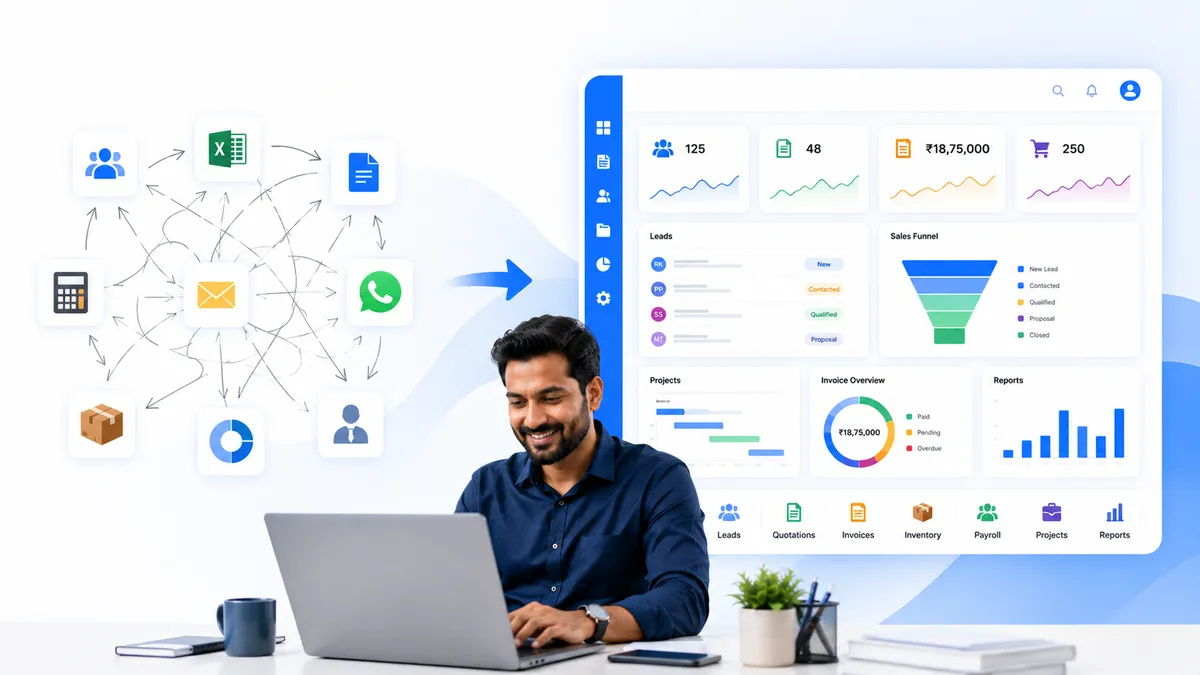
Before long, your business is juggling multiple applications that don't communicate with each other.
Your sales team updates one system, your accounts team uses another, and your project managers rely on spreadsheets or WhatsApp. Information becomes scattered, duplicate data entry increases, and simple tasks take longer than they should.
The real challenge isn't having too much software it's having software that works in isolation.
This is where an all-in-one business management platform changes the way businesses operate.
Instead of switching between different applications, you can manage your entire workflow from a single system.
The Hidden Cost of Using Multiple Software
Many business owners focus only on subscription costs.
However, the real expense comes from inefficiency.
Using different applications often leads to:
- Duplicate data entry
- Lost customer information
- Inconsistent pricing
- Delayed follow-ups
- Manual report preparation
- Data synchronization issues
- Employee training on multiple tools
- Higher risk of errors
These hidden costs can have a greater impact on productivity than the software subscriptions themselves.
A Typical Business Without Integration
Imagine this common workflow:
A new customer sends an enquiry.
The sales team records the lead in Excel.
A quotation is created in Microsoft Word.
The quotation is emailed to the customer.
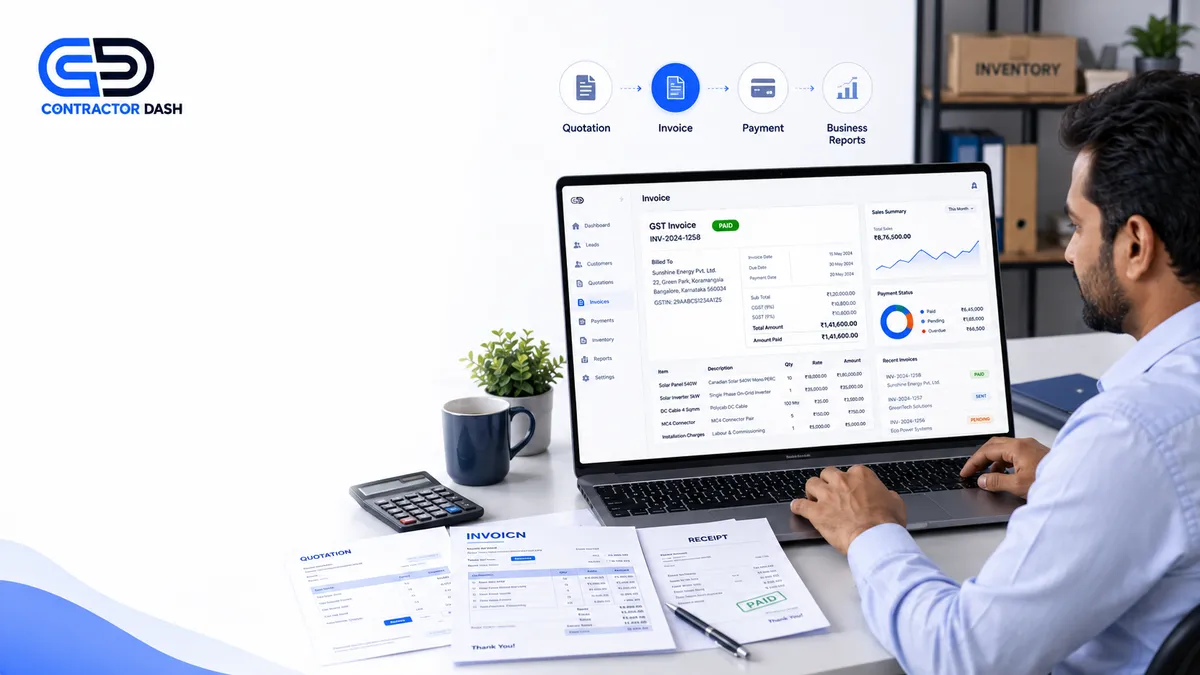
Once approved, the accounts team manually creates an invoice in another software.
Inventory is updated separately.
The project manager creates a task in a different application.
Attendance is recorded in a register.
Payroll is processed in another system.
Finally, management prepares reports by collecting information from all these sources.
This fragmented process takes time and increases the chance of mistakes.
The Smarter Way: One Connected Workflow
Now imagine the same workflow using an integrated business management platform. 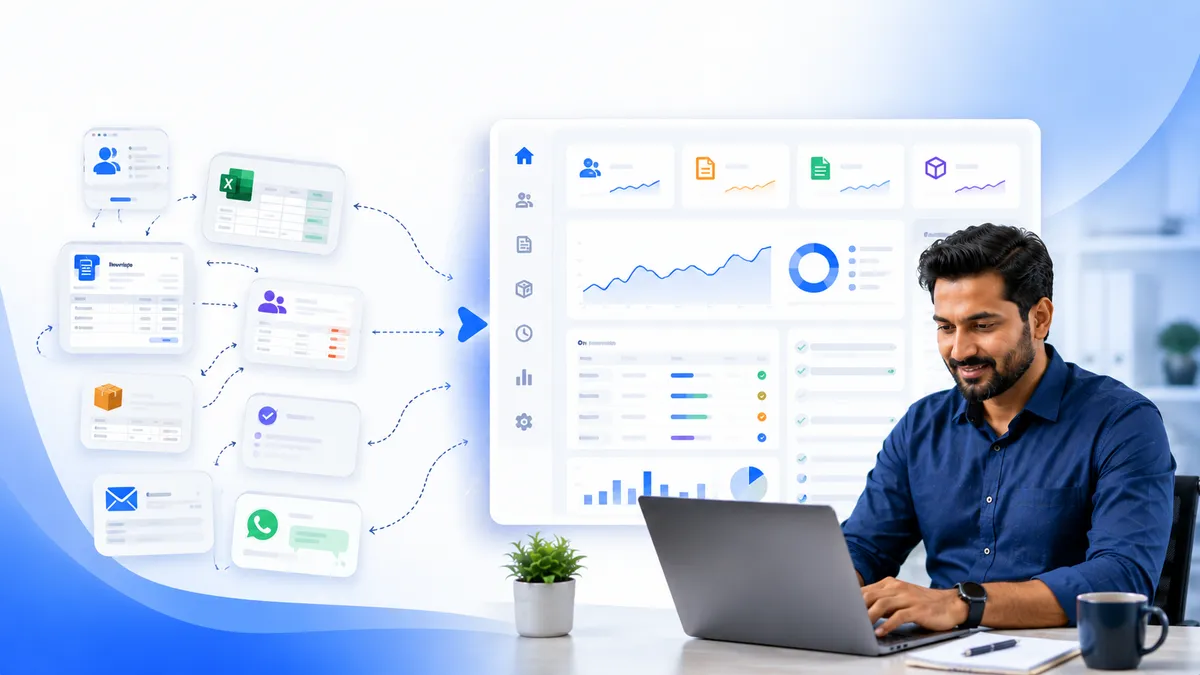
- Capture the lead.
- Convert the lead into a customer.
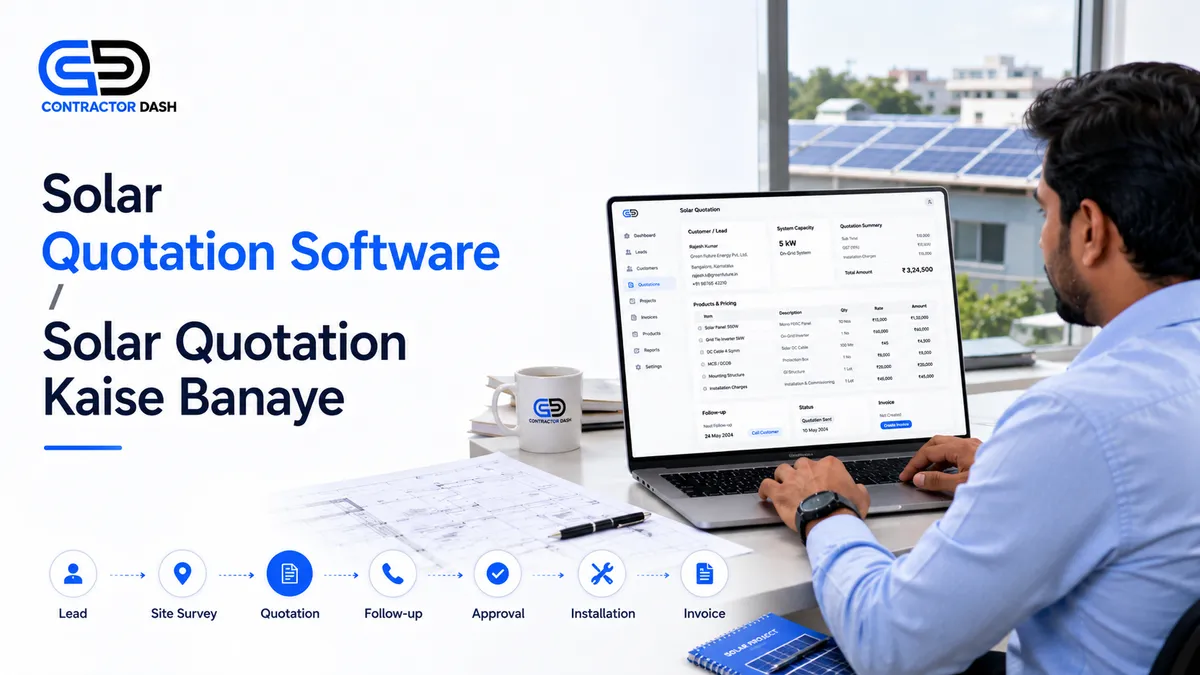
- Create a professional quotation.
- Track customer approval.
- Convert the quotation into an invoice.
- Update inventory automatically.
- Assign the project.
- Track employee attendance.
- Process payroll.
- View business reports in real time.
Everything happens in one place using the same customer and project data.
That means fewer manual steps, fewer errors, and better visibility across your business.
Why Businesses Are Moving to All-in-One Platforms
Growing businesses are increasingly choosing integrated platforms because they simplify operations and reduce the need for multiple disconnected applications.
Instead of purchasing separate software for every department, they look for a solution that connects their workflows.
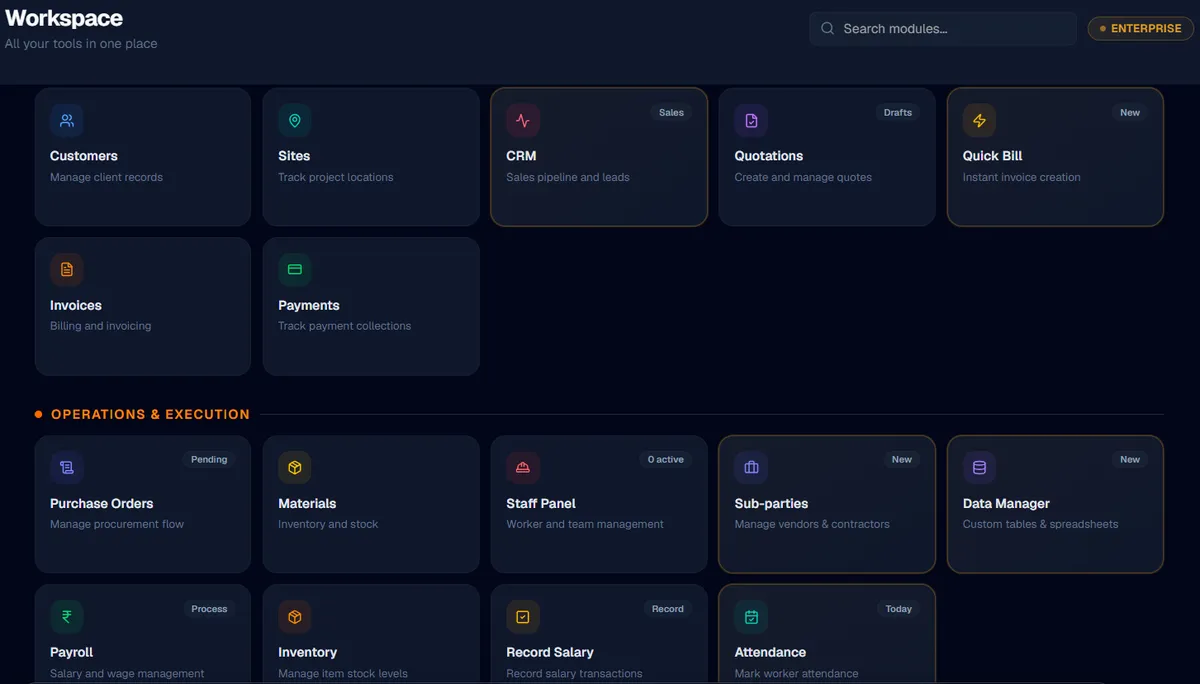
An integrated platform can help manage:
-
Customer relationships
- Lead tracking
- Quotations
- Invoices
- Inventory
- Purchase orders
- Vendor records
- Projects
- Employee attendance
- Payroll
- Reports
- Business analytics
Having everything connected allows teams to work more efficiently and reduces repetitive data entry.
Standalone Software vs Integrated Business Platform
| Business Function | Standalone Apps | All-in-One Platform -ContractorDash |
|---|---|---|
| Lead Management | Separate CRM | ✅ Included |
| Customer Database | Separate CRM | ✅ Included |
| Quotation Creation | Separate Tool | ✅ Included |
| Invoice Generation | Separate Billing Software | ✅ Included |
| Inventory Management | Separate Inventory Tool | ✅ Included |
| Project Management | Separate Project App | ✅ Included |
| Employee Attendance | Separate HR Tool | ✅ Included |
| Payroll | Separate Payroll Software | ✅ Included |
| Vendor Management | Separate Spreadsheet or App | ✅ Included |
| Reports & Analytics | Manual Compilation | ✅ Centralized Dashboard |
Is an All-in-One Platform Right for Every Business?
Not always.
If you're a freelancer who only sends a few invoices each month, a simple invoicing tool may be enough.
However, as your business grows and your team expands, managing multiple disconnected applications can become increasingly difficult.
Businesses that often benefit from an integrated platform include:
- Construction companies
- Civil contractors
- Solar installers
- Manufacturers
- Wholesalers
- Retail stores
- Interior designers
- Service providers
- Trading businesses
- SMEs with multiple departments
How ContractorDash Brings Everything Together
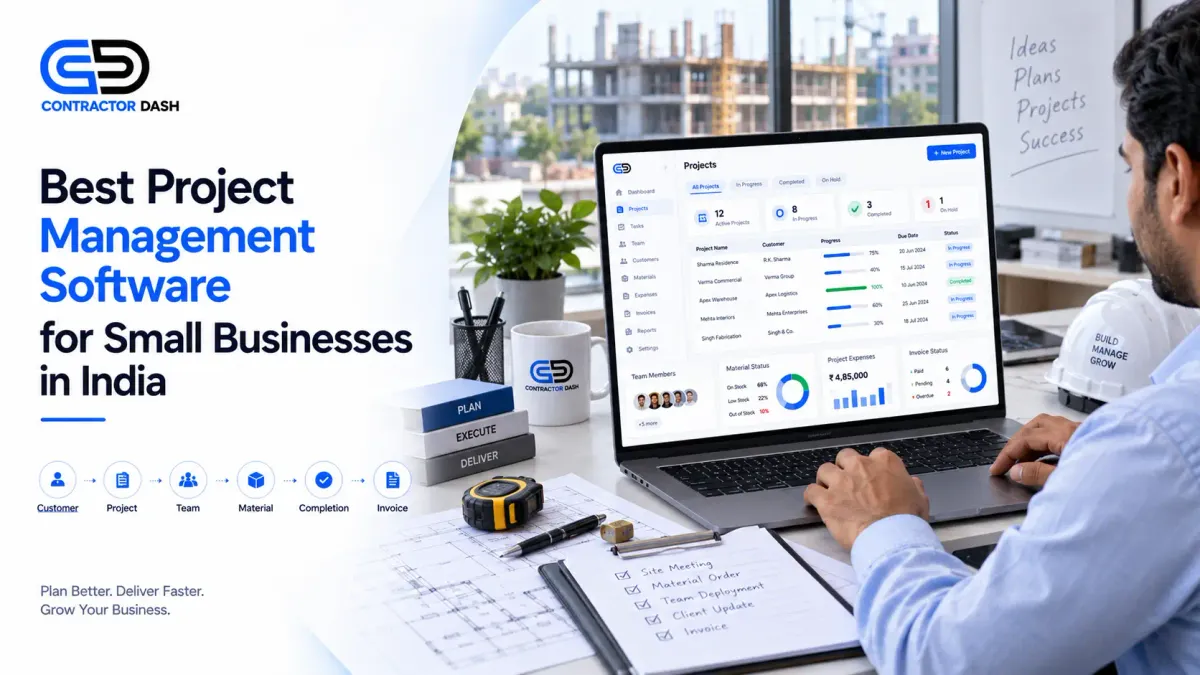
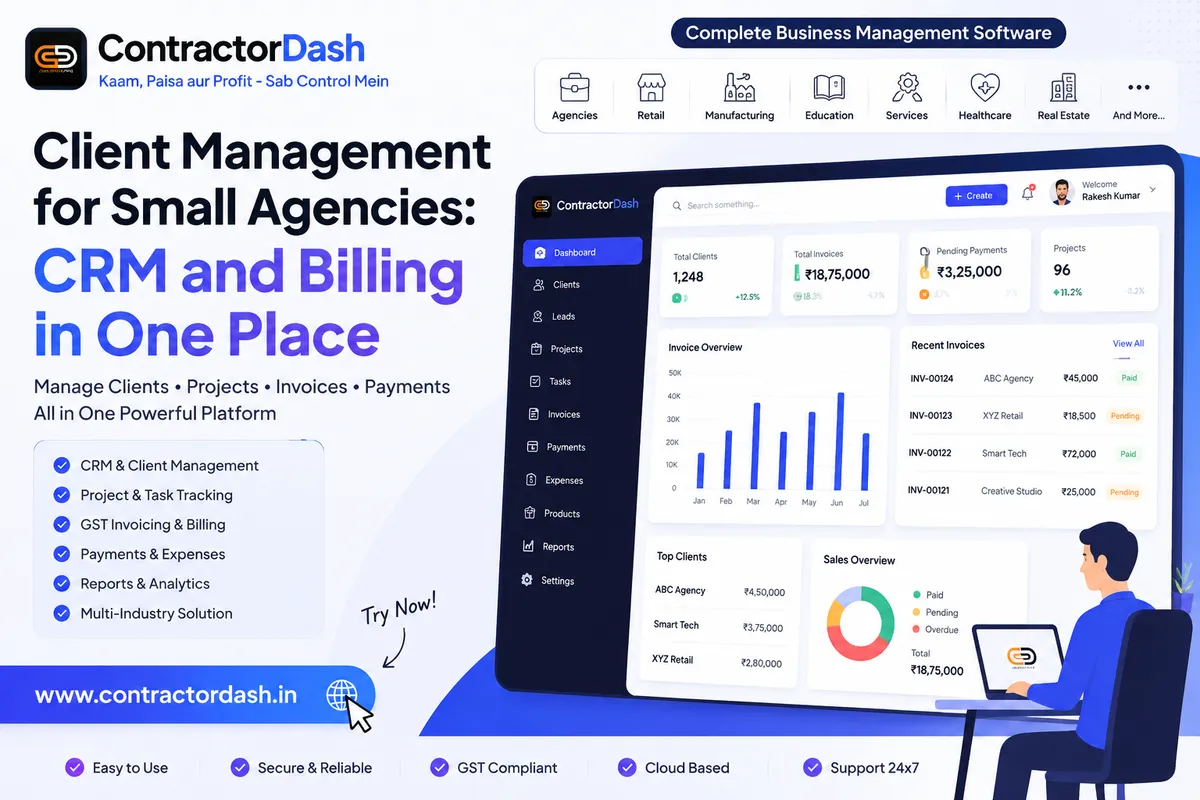
ContractorDash is designed to help businesses manage their complete workflow from one platform.
Instead of switching between different software for CRM, quotations, invoicing, inventory, payroll, projects, and reporting, businesses can manage these activities through a single integrated system.
With ContractorDash, you can:
- Capture and manage leads
-
Maintain customer records
- Create professional quotations
- Generate GST-ready invoices
- Track inventory and stock
- Manage projects and sites
- Record employee attendance
- Process payroll
- Manage vendors
- Monitor business performance through reports
This connected approach helps reduce duplicate work and gives teams better visibility into day-to-day operations.
Frequently Asked Questions
Why should I use an all-in-one business management platform?
An integrated platform can reduce duplicate work, improve collaboration between departments, and centralize business information in one place.
Can an all-in-one platform replace CRM software?
Many integrated platforms include CRM functionality alongside quotations, invoicing, inventory, and other business tools
Is an all-in-one platform suitable for small businesses?
Yes. Businesses expecting to grow often prefer a platform that can support additional workflows without requiring multiple software purchases
Can integrated software improve reporting?
When data from sales, inventory, finance, and projects is stored in one system, reporting becomes faster and more consistent.
What industries benefit the most?
Construction, manufacturing, retail, wholesale, solar, contracting, interior design, logistics, and service businesses often benefit from integrated business management platforms.
Conclusion
Running a business with multiple disconnected software applications may seem manageable at first, but as your operations expand, it can create unnecessary complexity.
An all-in-one business management platform brings your customer information, quotations, invoicing, inventory, projects, payroll, vendors, and reports together in one connected system.
Instead of spending time moving data between different applications, your team can focus on serving customers, completing projects, and growing the business.
Ready to Simplify Your Business Operations?
If you're looking to replace multiple business applications with one integrated platform, ContractorDash helps you manage your complete workflow from lead capture and CRM to quotations, invoicing, inventory, project management, payroll, attendance, vendor management, and business reporting all from a single dashboard.
Book a free demo and discover how one platform can help streamline your entire business.